
Commercial Kitchen Floor Cleaning
Remove built-up grease, food soil and grime from restaurant tile and grout with a cleaning plan designed around your kitchen, operating hours and floor condition.

A Cleaner Floor Without Disrupting Service
Commercial Kitchen Floor Cleaning targets the greasy film and compacted soil that routine sweeping and mopping leave behind. San Antonio Restaurant Cleaning cleans restaurant flooring around cook lines, prep areas, dish stations, coolers, storage rooms and other back-of-house spaces. The scope is based on the floor material, soil load and access around fixed equipment.
Restaurants near the River Walk often work within tight delivery windows and compact back-of-house layouts. Pearl-area kitchens may need cleaning coordinated around dining service and event traffic, while businesses near the Medical Center can have extended operating schedules. In each setting, access and drying time matter as much as the cleaning method.
Our team removes loose debris, applies a floor-compatible degreaser, provides mechanical agitation where appropriate and extracts the suspended soil instead of spreading it with a mop. We are a restaurant company San Antonio homeowners rely on that sets expectations before work begins, protects nearby surfaces and explains what can realistically be improved based on the floor's age and condition.
Restaurant Tile Cleaning and Grout Cleaning
Commercial kitchen tile is durable, but textured surfaces, low points and grout joints hold grease. A mop can pick up fresh spills while leaving an oily residue in surface texture and along edges. Once that residue attracts dirt, the floor may look dull soon after regular cleaning.
Restaurant Tile Cleaning starts with identifying the tile and testing the chemistry in a small area. Porcelain and quarry tile are common in commercial kitchens, but they do not always share the same grout, coating or previous maintenance history. The cleaner must also account for stainless steel, aluminum and other nearby materials that can react poorly to unsuitable chemicals.
Restaurant Grout Cleaning requires dwell time and agitation because grout joints sit lower than the tile face. We concentrate on cook-line edges, traffic lanes, floor transitions and the spaces around equipment legs. Extraction then removes the loosened grease and dirty solution. Cleaning can improve stained grout substantially, but permanent discoloration, missing grout and failed joints require repair rather than stronger chemicals.

What Restaurant Floor Cleaning Services Address
Kitchen Floor Degreasing
A compatible alkaline degreaser breaks down cooking oils and greasy film. Product strength and dwell time are adjusted to the soil and flooring rather than applied at maximum concentration.
Mechanical Agitation
A rotary scrubber, deck brush or suitable floor machine works cleaner into textured tile, traffic lanes and grout joints. The tool is selected according to access and floor condition.
Soil Extraction
Wet extraction or controlled recovery removes suspended soil and spent cleaning solution. This avoids leaving a dirty film that can dry back onto the floor.
Edges and Equipment Lines
Hand detailing targets base edges, corners, equipment legs and accessible spaces beneath movable items where grease commonly collects.
Floor Drain Awareness
The work plan accounts for drain location, slope and standing water. Cleaning wastewater must be managed properly and should not be sent to a storm drain.
Recurring Maintenance
High-use cook lines may need more frequent Restaurant Floor Degreasing than storage rooms or light-traffic areas. A practical schedule can divide the kitchen into cleaning zones.
Inspect the Floor and Plan Access
We identify the floor material, grout condition, coatings, drains, fixed equipment and grease concentration. The team also confirms which items the restaurant will move and which areas must remain accessible.
Remove Dry Soil and Protect Nearby Surfaces
Loose food debris and grit are collected first. Sensitive surfaces and adjacent areas are considered before liquid cleaning begins.
Apply Suitable Cleaning Chemistry
Degreaser is mixed and applied according to the floor and soil level. Proper dwell time helps release grease, but the solution is not allowed to dry on the surface.
Agitate Tile, Grout and Edges
Mechanical scrubbing addresses open floor areas, while hand tools reach grout lines, corners and equipment perimeters. Extra passes may be needed near fryers and cook lines.
Extract, Rinse and Review
The dirty solution is recovered, followed by rinsing as needed. We review traffic lanes, grout and edges, then allow enough drying time before the area returns to normal use.
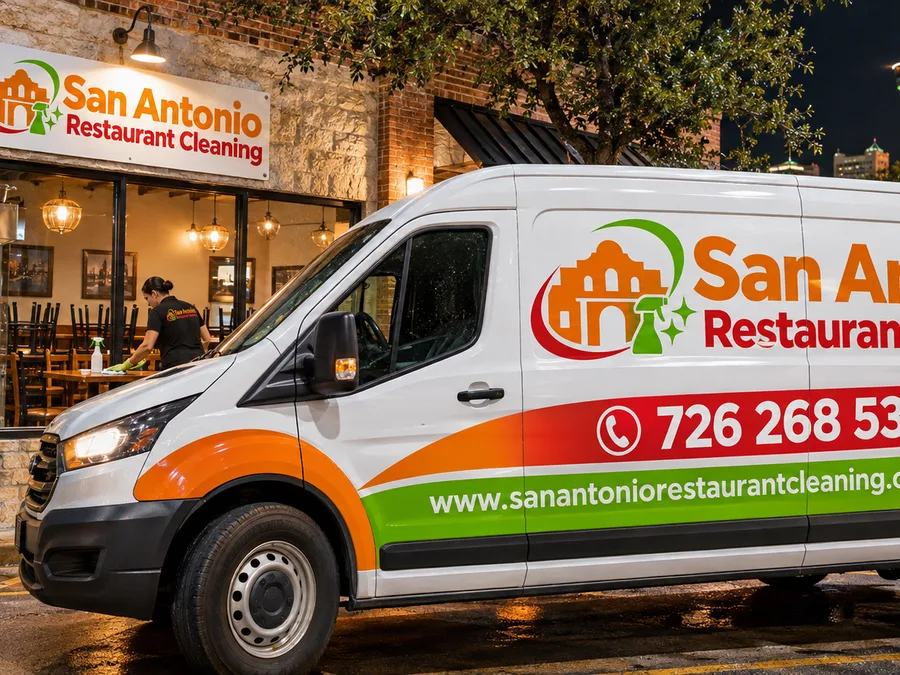
Restaurant Floor Cleaning in San Antonio
Restaurant Floor Cleaning San Antonio businesses arrange often has to fit between closing, prep and the next service period. Downtown kitchens near the River Walk may have limited loading access and smaller equipment clearances. At Pearl, cleaning may need to avoid dining hours and scheduled events. Along the Medical Center corridor, long operating hours can require work in phases so the entire kitchen is not taken out of use at once.
Hot weather also matters. Grease can spread through busy traffic lanes, while fast evaporation can shorten chemical dwell time near open doors or warm equipment. The answer is controlled application in manageable zones, not flooding the floor or allowing degreaser to dry.
San Antonio operates a separate storm sewer system, so wash water must not be discharged into street or parking-lot storm drains. Wastewater handling should be planned around the facility's approved sanitary connections, drains and grease-control setup. Our Commercial Floor Cleaning San Antonio approach includes discussing access, water recovery and drying before the work date.
When Professional Degreasing Is the Right Next Step
Professional Restaurant Floor Degreasing is useful when the floor remains tacky after mopping, grout has darkened along traffic paths, or grease has accumulated around fryers and ranges. It is also appropriate before a reopening, after a deep equipment clean or when a restaurant wants to establish a more effective maintenance baseline.
Floor cleaning does not correct broken tile, failed grout, poor drainage or a worn coating. It may reveal those defects once the surface soil is gone. We identify visible concerns during the walkthrough so cleaning is not presented as a repair.
Preparation helps the work move efficiently. Remove food, utensils, loose mats and lightweight items from the cleaning zone. Let us know about damaged outlets, sensitive equipment, coatings or previous chemical reactions. Large appliances should only be moved when it can be done safely and without disconnecting utilities. Once the scope is clear, we can recommend a one-time deep cleaning or a recurring plan based on cooking volume and the areas that soil fastest.
Get a written cleaning scope built around your floor material, grease level, equipment layout and available service window.
Call for a Free QuoteCommercial Kitchen Floor Cleaning Questions
How much does commercial kitchen floor cleaning cost in San Antonio?
Pricing depends on cleanable square footage, grease buildup, floor material, equipment access and whether the work requires detailed grout cleaning. A compact open floor usually takes less labor than a heavily soiled kitchen with tight cook-line clearances. San Antonio Restaurant Cleaning confirms the exact scope and price after reviewing the kitchen and scheduling requirements.
Can you clean around fryers, ranges and fixed equipment?
Yes, accessible flooring around fixed equipment can be degreased and detailed with smaller tools. Safe clearance, hot surfaces and utility connections limit how far technicians can reach. The restaurant should arrange any movement of heavy or connected equipment before service.
How long will the kitchen floor take to dry?
Drying time varies with floor texture, grout depth, ventilation, indoor temperature and the amount of rinse water required. Extraction removes much of the liquid, but recessed grout and low areas can remain damp longer. Work should be scheduled with a practical buffer before employees resume food preparation or heavy foot traffic.
Will restaurant grout cleaning restore every grout line to one color?
No, cleaning can remove grease and soil but cannot reverse permanent staining, chemical damage, missing grout or previous repairs made with mismatched material. An inspection helps separate removable buildup from discoloration or structural defects.
Is kitchen floor degreasing safe for quarry tile?
It can be when the cleaner, concentration, agitation and rinse process are suitable for the tile, grout and nearby materials. Quarry tile commonly has a textured surface that benefits from mechanical scrubbing. A test area is sensible when a coating, sealer or unknown maintenance product may be present.
Can Restaurant Floor Cleaning Services be scheduled outside operating hours?
Scheduling can be arranged around the restaurant's operating window and the time needed for setup, cleaning and drying. Downtown access near the River Walk, Pearl event traffic and extended hours near the Medical Center can affect the workable window, so those details should be discussed before confirming service.
How often should a restaurant schedule floor degreasing?
Frequency should be based on cooking volume, oil use, floor texture and how quickly grease returns after routine mopping. A fryer line may need attention more often than dry storage. The initial cleaning provides a useful baseline for setting a recurring schedule by zone.
Plan a Cleaner, Safer Kitchen Floor
Tell San Antonio Restaurant Cleaning about the floor material, problem areas and operating schedule. We will outline the preparation, cleaning method and realistic results before work begins.